
Designing a Scalable Notification System: Leveraging Kafka, BullMQ, and the Factory Design Pattern

Building a scalable notification system is essential for applications that need to manage a high volume of user interactions and deliver messages in real-time across multiple channels. In this blog, we'll explore a design pattern that leverages Kafka, BullMQ, and the Factory Design Principle to create a robust and scalable notification system.
1. System Architecture Overview
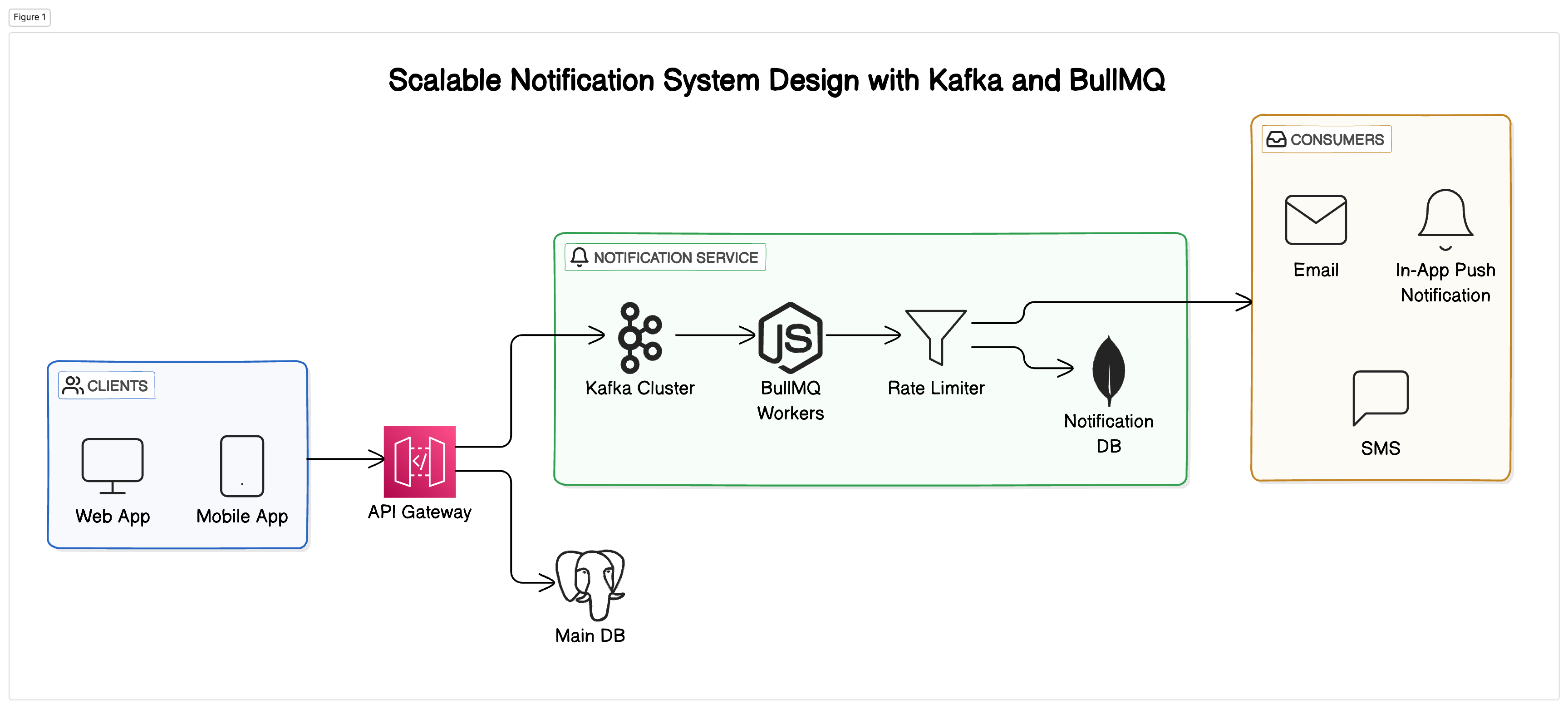
The diagram provided showcases the architecture of a notification system designed for scalability and flexibility. The system is designed to support multiple channels like Email, SMS, and In-App Push Notifications. Here's a breakdown of the components:
Clients: The system starts with clients, which can be either a web app or a mobile app. These clients interact with the system through an API Gateway, which serves as the entry point for all requests.
API Gateway: The API Gateway is responsible for routing incoming requests to the appropriate service. It also provides a layer of abstraction, allowing the clients to communicate with the backend services seamlessly.
Kafka Cluster: Kafka acts as the backbone of the system, serving as the message broker that handles all incoming notifications. The API Gateway forwards notification requests to the Kafka cluster, where they are stored in different topics based on their type.
BullMQ Workers: Once a notification message is placed in Kafka, BullMQ workers pick up these messages for processing. BullMQ is used to manage background jobs that handle the delivery of notifications.
Rate Limiter: To ensure that the system doesn’t overwhelm any communication channels, a rate limiter is implemented. This component manages the rate at which notifications are sent, especially critical for channels like email where service providers may impose limits.
Notification Database: All processed notifications are stored in the Notification Database. This allows for tracking, auditing, and ensuring that all notifications are delivered correctly.
Consumers: The final stage involves consumers, which represent the channels through which notifications are delivered. In this design, we support:
Email
SMS
In-App Push Notifications
2. Detailed Implementation
Step 1: Setting Up Kafka
Kafka is set up with multiple topics corresponding to different types of notifications (e.g., transactional, promotional). Producers, typically the API Gateway, send messages to these Kafka topics based on the type of notification.
Step 2: BullMQ for Background Processing
BullMQ workers are responsible for processing the messages pulled from Kafka. Depending on the notification type, the workers handle tasks like formatting the message, determining the appropriate delivery channel, and sending the notification.
Step 3: Factory Design Pattern
To manage the different notification channels, the Factory Design Pattern is employed. This allows the system to dynamically create the appropriate sender based on the notification type. Here’s how it works:
class NotificationFactory {
  static getSender(type) {
    switch (type) {
      case 'email':
        return new EmailSender();
      case 'sms':
        return new SMSSender();
      case 'push':
        return new PushNotificationSender();
      default:
        throw new Error('Unknown notification type');
    }
  }
}
This approach provides the flexibility to easily add new notification channels or modify existing ones without disrupting the overall system.
Step 4: Implementing the Rate Limiter
To manage the flow of notifications, especially for channels with rate limits (like email), a rate limiter is implemented. This ensures that the system adheres to any external service limitations, preventing potential bottlenecks or service disruptions.
Step 5: Storing Notifications
Processed notifications are stored in the Notification Database for record-keeping, ensuring that the system can handle retries in case of failures and provide an audit trail for delivered notifications.
3. Benefits of This Design
Scalability: By leveraging Kafka's distributed nature and BullMQ’s job management capabilities, the system can handle a high volume of notifications with ease.
Extensibility: The Factory Design Pattern allows for easy integration of new notification channels, making the system future-proof and adaptable to changing requirements.
Efficiency: With the rate limiter in place, the system ensures that notifications are delivered without overwhelming any single channel, maintaining the performance and reliability of the service.
Maintainability: The clear separation of concerns in the architecture, with each component having a distinct role, makes the system easier to maintain and evolve over time.
4. Conclusion
This scalable notification system design offers a robust solution for delivering real-time notifications across multiple channels. By integrating Kafka, BullMQ, and the Factory Design Principle, the system ensures high performance, flexibility, and maintainability, making it well-suited for applications with diverse notification needs. Whether you're sending transactional alerts or promotional messages, this architecture provides a solid foundation for reliable and scalable notification delivery
.